
February 26, 2009
UNHCR Forum on the Reintegration and Protection of Refugees
27.01.09
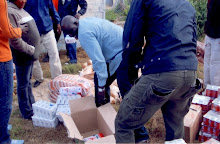
Food Task Group: As many of the refugees are still in the camps, too afraid to reintegrate into mainstream society, the need to distribute food is still great. While the main aim is to try and reintegrate the refugees back into the communities, many of them have yet to leave. The government has decided to stop its shipments of food into the camps in way to force the refugees back into the communities. But whether this is the right way to go is not know. There are still some organizations that distribute food to the refugee camps, ADRO being one of them. In the last 2 months ADRO has made regular visits to the Bluewaters refugee camp, providing them food and other necessities. But ADRO’s funding is slowly running out and thus needs to find ways to continue its support for the refugees. The point was made by the UNHCR whether the distribution of food is the reason the refugees stay in the camps. There was also further discussion about the main duty of the Food Task Group. Its duty is not actually to deliver food to the camps, but to coordinate the issue with the other refugee organizations. ADRO and Scalabrini were to be the contacts for the other organizations if they were looking to distribute food. No matter what ones views on the subject, as long as the refugees stay in the camps, they will need to supplied with food. The Food Task Group should coordinate and discuss with the other groups in order to find ways to get some funding or assistance in providing the refugees with food.
Income Generation Task Group: The point of the matter is that the refugees cannot stay in the camps indefinitely. They have to return to the communities, but it is important that they learn to sustain themselves by assisting them in finding a job or training opportunities. Yet there are a lot of challenges facing this task group. They have been going to a number of refugee camps picking up CV’s, but many refuges either lack a CV all together, or they will be unable to get contacted, as they aren’t in possession of a phone. These task groups also have problems finding people who will support the refugees in providing them with training opportunities. Scalabrini has announced that it has approached the University of New York to see if they can create a program that would assist the refugees in creating small businesses and provide training for such purposes. Many refugees believe, especially the ones from Somalia, that the only skills they have is to run a business. A major problem, which needs to be addressed, is that refugee businesses could have the affect of undercutting South African owned businesses, which would lead to increasing resentment among native South Africans and cold thus lead to more xenophobic attacks.
Participatory Assessment Task Group: An important aspect of all the previously mentioned issues is to have a comprehensive framework in place to assess the performance of all the programs aimed at refugees. This task group finished Part A of the Assessment form, which is just a quick scan of the work being done, and it’s in the process of creating Part B of the assessment, which will involve comprehensive interviews with refugees. It’s very important to take the points of view from all the affected parties. One cannot create programs designed to aid the refugees, without taking their views into account. Refugees might have different priorities than those running the organizations and thus these two groups need to get together and discuss the issues in order to provide the best possible services. A comprehensive participatory assessment will greatly aid these organizations in preparing measures in case anything in the scale of the xenophobic attacks happened again. If it were to reoccur, then the organizations would be better prepared to handle the situation. It’s very important to have a system in place that enables us to look at the impact of everything we do.
Some thoughts
ADRO will continue to take part in this forum as it is an important way to create networks with the other organizations devoted to the lives of the refugees. By working together with these other groups we can continue to learn more on the issues affecting the refugees, which will aid us when we advocate on behalf of the refugees in our many discussions with parliamentary ministers, officers or other groups designed in some way to assist refugees and other vulnerable people. The main aim of anything that ADRO does is to help the refugees live a life of dignity as promised to them in the South African constitution and the Refugee Act of 1993.



No comments :
Post a Comment