October 31, 2008
MEDIA CENTRE
Disabled refugees win right to collect grantsJune 26 2007 at 03:59PM
Refugees can work while they wait for asylum
By Hanna Ingber
WinDisabled refugees will soon receive government assistance, but disabled asylum seekers - even those injured while in South Africa - will continue to collect nothing.The department of social development will extend social relief of distress grants to all disabled refugees in South Africa, according to Jacob van Garderen of Lawyers for Human Rights (LHR). His strategic litigation unit, which represented disabled refugees and two organisations of which they are members, challenged the constitutionality of the exclusion of refugees from disability grants.The department would change its system so applicants did not need a South African identification number to make a claim, he said. Once the policy was changed, the whole class of disabled refugees would receive grants to the same value as South African citizens.
Interim payments were already being paid to those refugees on whose behalf the application was brought, he said.Asylum seekers, those who have applied for asylum or refugee status, will not receive the grant because their claim may be rejected, according to Kaajal Ramjathan-Keogh of LHR.Fatima Khan, refugee project counsellor at UCT Law Clinic, said she worked with many disabled refugees from war-torn areas. Her clients included refugees from places such as the Somali capital Mogadishu, who had had their legs blown off.Khan also had clients who had been disabled in South Africa as a result of xenophobia. It was one thing if a person came to this country disabled, she said, "but it's another if a person becomes disabled within the country and that person can't receive any assistance".Of the approximately 100 refugees in the African Disabled Refugees Organisation, the majority became disabled after they arrived in South Africa due to hate crimes, according to chairperson Anaclet Mbayagu. He said more than eight members of his organisation had been thrown out of a moving train, and four of them were subsequently in wheelchairs. About half of the members of his organisation were refugees and would, therefore, receive the grant, but the others were still asylum seekers and would not receive any money, he said. Twenty members were part of the court application filed with Lawyers for Human Rights and had already begun receiving disability grants, but the money was not enough to live on, he said. The refugees could work and must rely on friends and family, he said."Some is better than nothing," Mbayagu said.Ambaye Asfaw Kelbore, 30, fled political persecution in Ethiopia and came to South Africa in 2004. He was working as a salesman, he said, but two men robbed him and shot him in the chest last February, leaving him paralysed from the waist down. He says they did it because he was a foreigner.Kelbore cannot work and will not receive government assistance because he does not yet have refugee status. He lives with his sister in Bellville. "She also doesn't work because of me, because I need her help," he said. "It's very hard for me."The department of social development did not respond to telephonic requests for information.hanna.win@inl.co.za

October 28, 2008
Xenophobia
Currently, a wave of attacks on migrants and refugees by South African citizens in many informal settlements resulted in lost lives, damaged property, and a lasting culture of fear for both foreigners and citizens alike in these informal settlements. Nearly 20,000 in the Western Cape have been displaced in what the media describes as a “wave of xenophobia sweeping.”
This organization recognizes that disabled refugees, women and children have fled their country of origin due to fear for their lives, hoping to find asylum in another country. Upon arrival to South Africa however, they have not been greeted so openly and find that access to services and facilities are not disabled persons friendly. This organization is committed to making these services more adequate and helping to provide these persons basic needs such as, material assistance, seeking accessible and affordable accommodation, finding suitable jobs, improving access to public transport, an access to other resources.
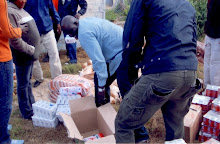
Since the xenophobia attacks the ADRO is helping to alleviate conditions in the refugee camps.
ADRO has worked in the temporary camps, others living on the streets of
Refugees and Asylum Seekers
As a signatory to UN and OAU conventions on refugee protection, South Africa is obliged to provide protection to people who have well-founded fears of persecution due to race, ethnic origin, political and religious creed, and membership of any particular social groups.- A Refugee is a person fleeing from individual persecution, generalized human rights violations or armed conflict in their country of origin.
- An Asylum Seeker is a person whose asylum claim has not yet been examined to ascertain whether his/her fear of persecution is well-founded.
- A Recognized Refugee is a person to whom the South African government has granted refugee status and asylum because it has established that his/her fear of persecution is well-founded.
Disabilities and Vulnerabilities Our Members Are Faced With
- Physical Disability
- Visual Disability
- Hearing Disability
- Mental Disability
- Intellectual Disability
- Abandoned refugee children
- People who are living with HIV/AIDS
Among the above there are three (3) categories:
- People who are born with these disabilities
- People who became disabled due to war
- People who became disabled due to crime and Xenophobia attacks